Local detail
Where People Go Wrong
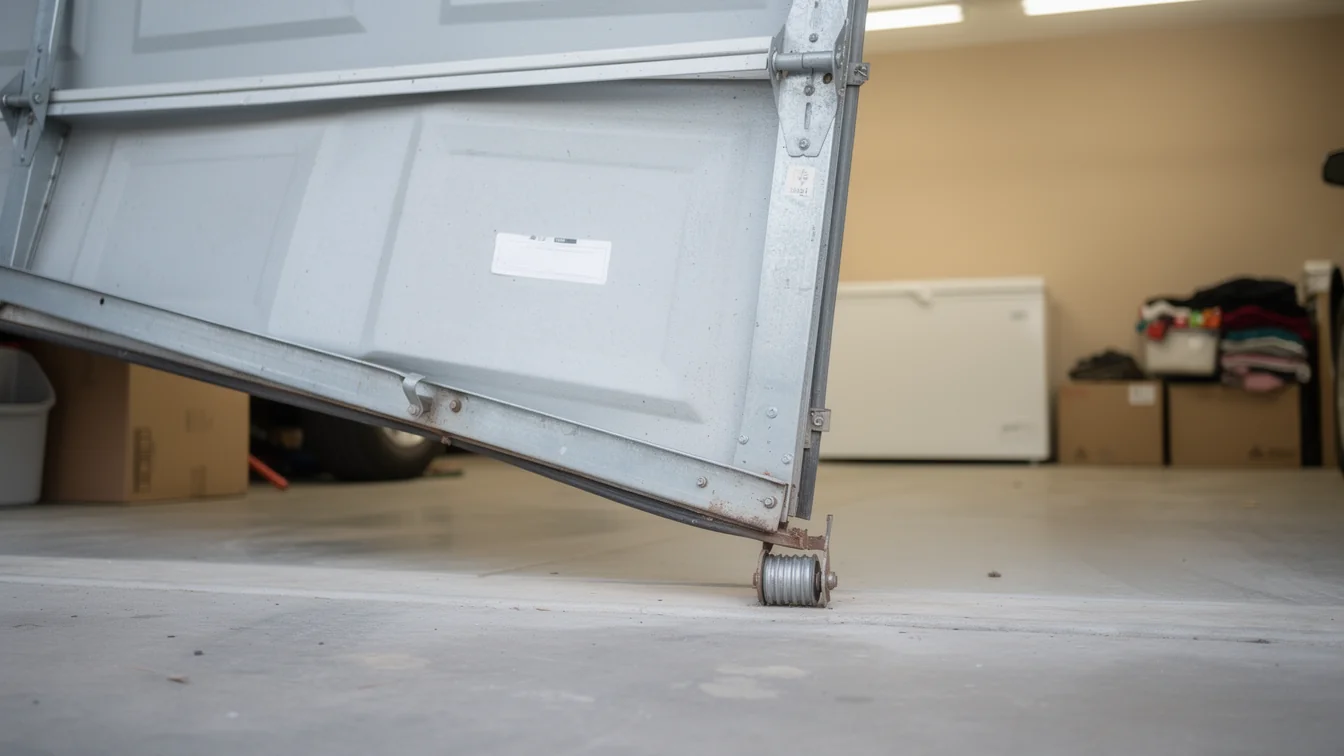
Most Lutz homeowners assume a door jumps the track because something hit it hard - a car bumper, a kid's bike, a storm gust. Sometimes that's true. But the calls we actually get from Cheval, Pebble Creek, and Odessa are mostly houses built in that long run between 1975 and 2011, median around 1988, where the track brackets are still the originals. Nobody hit anything. The lag screws holding the track to the jamb have been working loose for three decades, a little at a time, every time the door runs. When a roller finally pops free, the owner's instinct is to grab the track and bend it back by hand. That almost always makes the gap worse, because the bracket underneath is still loose - you've straightened the rail but left the thing holding it up unfixed. The fix has to start at the bracket, not the rail.
The area
The Situation
Lutz housing runs 1975 through 2011, with most of it concentrated in the 1980s and 90s across the named subdivisions here - Cheval, Tampa Palms, West Meadows, Carrollwood Village Phase II among them. That means a lot of track hardware from the same two-decade build window, mounted with the same fastener patterns common to that era of construction. None of that is bad hardware. It's just hardware that's now 30 to 45 years into a job it was built to do for maybe 15 to 20 before something needed attention. Add a mild temperate climate - no deep freeze, no real thaw cycle - and the wear pattern here isn't cracking or ice-jammed rollers. It's slow mechanical fatigue: screws backing out a quarter turn at a time, brackets flexing a hair more each month, until one day the roller finds the gap and jumps.
What we find
Leaving It Alone
A door that's slightly off track doesn't fail all at once. First it runs rough and makes a new noise. Then a roller starts riding the edge of the rail instead of the groove, which wears the roller flat on one side. Eventually the cable on that side takes uneven tension, frays faster than its mate, and you're looking at a cable job on top of the track job. If you keep running the opener through it, the motor fights the bind every cycle, which is how a track problem turns into an opener problem. Here's the honest part: once a track section is bent past a certain point, bending it back isn't a repair, it's a temporary patch. We replace that section rather than pretend a 1980s rail can be coaxed straight again - trying to save it usually just means a second call in a few months.
How we work
What Local Conditions Do
We don't deal with the ice-dam stress that keeps crews busy up north every winter - Lutz sits in a mild temperate band, so a bent track here almost never starts with frozen rollers or an ice-locked bottom panel. What it starts with is heat and humidity working steadily on fasteners for 30-plus years straight, with no cold snap to pause the cycle. On a house built in 1988, that's roughly three and a half decades of the same half-dozen lag screws holding the same bracket, flexing slightly every warm, humid day of the year. It's not dramatic and it's not sudden. It's just time and climate doing what they do to any fastener that never gets a break. That's why track problems in this area tend to show up gradually - a little rattle, then a little gap - rather than overnight.
Talk to a local pro
Garage door trouble in Lutz?
Same-day service with honest, upfront quotes.